




Player support has become a core part of the gaming experience. For many studios, the difference between a 4.8-star game and a 3.9-star game isn’t mechanics or graphics, it’s how quickly and empathetically support step in when things go wrong. When a player faces an issue, every translation mistake, every generic response chips away at trust.
According to Helpshift’s Benchmark Report, 58% of all player issues are now resolved through AI-driven workflows without human escalation, cutting average response times by up to two hours and raising CSAT from 3.7 to 4.2 in gaming support.
It’s proof that intelligent, localized, and empathetic support can shape how players perceive a game long after launch.
In this article, we’ll explore how localization and personalization together redefine modern player support and why treating them as separate strategies limits how far your studio can go.
Why Player Support Is Evolving Beyond One-Size-Fits-All
The problem with legacy systems
For years, studios have relied on outdated support setups like email tickets, web forms, and manual workflows scattered across disconnected tools. These legacy systems were built for a slower, simpler era of gaming.
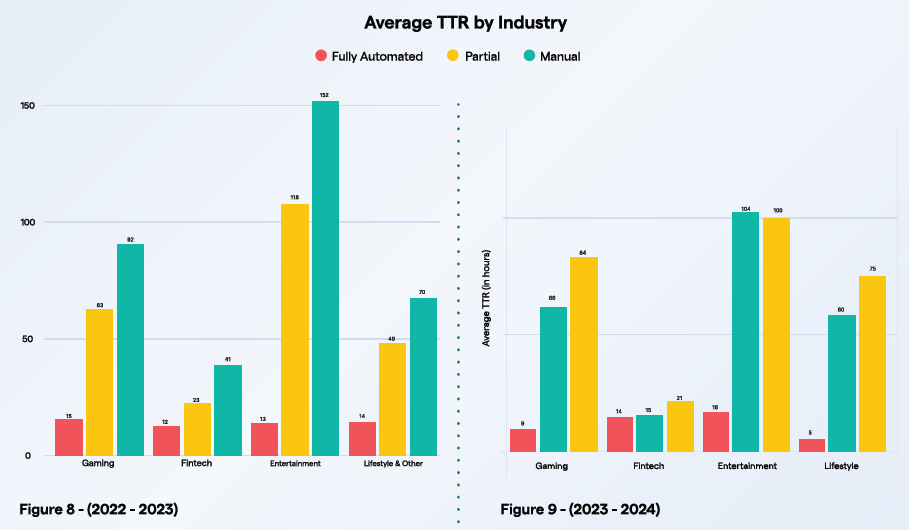
According to Helpshift’s 2024 Digital Benchmark Report, players often had to wait for an agent “fluent in their language to come on shift,” delaying help for hours and frustrating users worldwide. Manual back-and-forth between agents and databases inflated resolution times to an average of 84 hours, compared with just 9 hours under full automation.
The global reach of modern games
Mobile and cross-platform titles have broken geographical walls. A single update can reach millions of players from São Paulo to Seoul overnight. Yet support operations often struggle to keep pace.
Global reach brings language barriers, time zones, and cultural nuances. A player reporting a payment issue in Japan expects a different tone, speed, and context than someone in Mexico. Scaling this consistency requires a mix of localized content and AI-driven efficiency.
Rising player expectations for tailored experiences
Players expect the same personalized attention from support that they get from in-game rewards and recommendations. Generic scripts feel out of place in an immersive world; they customize themselves. Studios are recognizing that CX is part of the game’s narrative arc and not an afterthought.
How support influences retention and loyalty
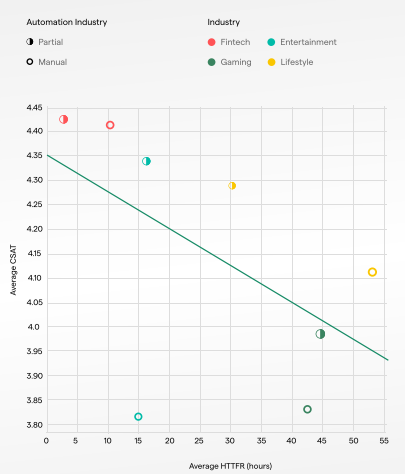
Every ticket is an opportunity to either salvage or lose a player relationship. Helpshift’s research shows a direct correlation between faster responses and higher CSAT. Brands that implemented partial automation saw significantly higher CSAT scores in gaming, even when human response times remained similar.
What Is Localization in Player Support?
Localization goes beyond translation. It makes players feel like the game and its support were built for them. Modern support leaders are treating localization as a core pillar of CX rather than a marketing task. Here’s what that looks like in practice:
Language translation and regional adaptation
Localized support ensures that every help article, bot flow, and agent response feels native. Helpshift’s Language AI supports over 70 languages, providing real-time translation and context-aware responses that reflect each player’s region.
Cultural sensitivity in tone and messaging
A polite “we understand your concern” might resonate in the U.S., but a direct apology in Latin America builds faster trust. Localized messaging acknowledges these cultural expectations, preventing misinterpretations that could escalate player frustration.
Examples: supporting players in APAC vs. LATAM
- APAC players value speed and precision. Support is expected to be quick, concise, and available through in-app messaging.
- LATAM players expect warmth and personal reassurance. Localized agents or AI translations that carry empathy in tone perform better here.
Helpshift’s Language AI bridges this gap by retaining brand voice while adapting emotional tone across languages.
What Is Personalization in Player Support?
Personalization is about context. It’s how support systems use data to treat each player as a known individual, not just a ticket.
Using player data to tailor responses
From purchase history to device type and region, every data point helps build contextual support flows. Helpshift’s Smart Intents detect a player’s issue with up to 95% accuracy, ensuring queries are instantly routed to the right workflow or agent queue..
VIP vs. casual player support experiences
A VIP player who spends hundreds each month expects priority treatment and rightly so. Helpshift lets studios create custom queues and automated routing rules for high-value players, ensuring their concerns receive faster, human-led resolution. This boosts loyalty and also protects long-term revenue.
Dynamic workflows based on player history
AI can identify recurring issues and adjust responses accordingly. For instance, if a player has previously faced a payment error, the bot can skip generic troubleshooting and move straight to refund confirmation. This context-driven approach keeps interactions efficient and relevant.
Localization vs. Personalization: The Key Differences
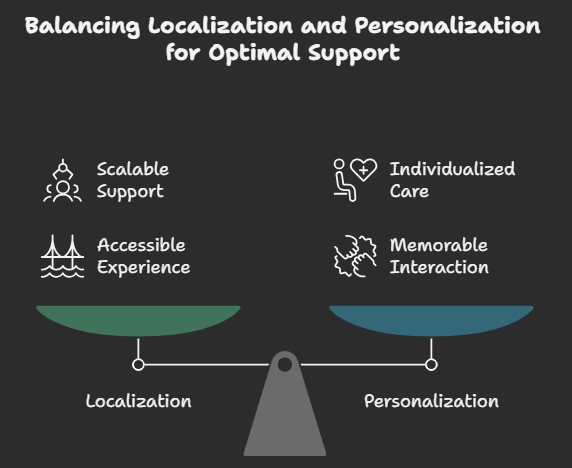
Localization makes your support accessible; personalization makes it memorable. Here’s how they complement each other:
Where localization solves scale and accessibility
For games operating across 25 languages or more, localization ensures support doesn’t buckle under volume. AI-powered translation and multilingual workflows help scale without compromising accuracy or tone.
Where personalization builds loyalty and trust
Personalized support turns tickets into relationships. By acknowledging a player’s past interactions, preferences, and progress, agents can deliver contextual care that feels earned.
Why focusing on one alone isn’t enough
A localized experience without personalization feels robotic. A personalized one without localization feels foreign. Studios that master both create support that feels native and intuitive — the kind of experience that keeps players coming back even after frustrating moments.
Why You Need Both for Modern Player Support
Gaming has gone global, but player expectations remain deeply personal. Here’s why studios can’t choose between the two.
Global games demand language inclusivity
Global gaming brands are proving the value of multilingual AI. For instance, SYBO Games, creators of Subway Surfers, achieved a 4.3 / 5 CSAT and 77% automation rate within 3 months of implementing Helpshift’s AI-powered multilingual support. That’s tangible proof that language inclusivity directly improves both response speed and satisfaction without scaling team size.
Personalized interactions drive higher CSAT
Players want recognition. When AI and agents use contextual data to respond empathetically, CSAT scores rise. Helpshift reports an average 25% increase in CSAT scores for brands adopting AI and automation, with agents freed up for high-touch tasks.
Combining both to retain diverse player segments
Localization keeps players heard in their own language. Personalization makes them feel understood as individuals. Together, they create trust loops that turn support from a reactive function into a growth lever.
How Helpshift Enables Localization + Personalization Together
Today’s studios don’t have to choose between reach and relevance. Helpshift delivers both through a single, AI-powered platform. Here’s how:
AI-powered multilingual support across regions
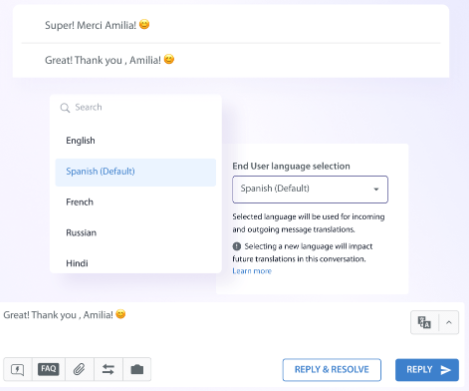
Helpshift’s Language AI handles real-time translation and intent detection across 70+ languages. It reduces bottlenecks by auto-routing queries based on region, language, and intent while preserving brand voice. This means players in Korea and Germany receive the same quality of help in their own language and cultural style.
Context-aware AI that adapts to player profiles
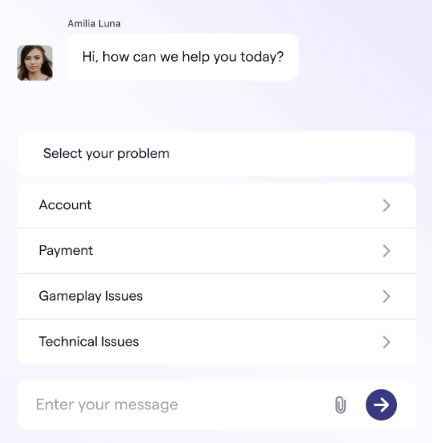
Helpshift’s Smart Intents and Agent AI Co-Pilot learn from player history, sentiment, and issue frequency to adjust tone and priority. It detects frustration in messages and routes them to human agents before escalation occurs, reducing ticket backlogs and protecting brand reputation.
Integrated workflows for VIP escalations and regional needs
Whether it’s a VIP escalation in Singapore or a localized event in Brazil, Helpshift’s Agent Workspace automates the workflow from intent detection to agent handoff. AI-powered routing cuts assignment delays and ensures priority queues align with both player value and regional requirements.
Case Studies: Studios Doing It Right
Jam City: Localized events with personalized support
Jam City used Helpshift to run region-specific events and support campaigns within its top mobile titles. Localized messaging and AI triage ensured players received timely help without leaving the app. By combining event data with Smart Intents, Jam City personalized responses based on player progress and region, creating a consistent brand voice worldwide.
KRAFTON: Balancing global launches with tailored VIP care
For a publisher with millions of BGMI and PUBG players worldwide, KRAFTON needed support that felt local yet scaled globally. Helpshift enabled AI-powered routing and multilingual support across regions, allowing KRAFTON to handle spikes during major launches while preserving personalized care for top-tier players.
Huuuge Games: Personalizing at scale with AI and language support
Huuuge Games achieved a 79% deflection rate and a 3.9/5 CSAT score (4.8 for VIP players) after integrating Helpshift’s Language AI and automation suite across 25 languages.
By localizing FAQs and automating routine tickets, they freed agents to focus on complex, relationship-building interactions.
Final Thoughts: The Future of Player Support Is Both Local and Personal
Player support is evolving into a strategic asset that builds brand equity. Games that localize without personalizing feel distant; those that personalize without localizing feel exclusive. The sweet spot is a system where AI connects languages, data, and human empathy into one continuous experience.
If your studio wants to deliver seamless, contextual, and culturally aware support, don’t choose between localization and personalization, choose both.→ Request a Helpshift demo to build smarter global support for your players.