
With over 6.3 billion people currently using smartphones, the mobile app market has seen rapid growth. This number is projected to surpass 7.7 billion by 2028. The use of apps and the adoption of smartphones continue to rise steadily, with no signs of slowing down. As the battle for the users’ attention becomes even more fierce, app developers and marketers face the challenge of building a user acquisition strategy that actually works and brings app installs (preferably with a reasonable ROI).
What is User Acquisition
User acquisition (UA) is a process aimed at gaining new users for a product or service. In the world of mobile, user acquisition is a strategy or a set of strategies that are focused on increasing app’s discoverability and generating more downloads.
How does User Acquisition work?
User acquisition isn’t just about getting people to download your app; it’s about creating a strong connection that keeps them coming back. It’s a mix of strategies that work together to not just get downloads, but to build a community of loyal users.
Here’s how it breaks down:
- Paid Media Marketing: This involves paying to get your app in front of potential users. One of the most effective methods is mobile app install ads. These ads target people likely to be interested in your app, making it easier for them to find and download it. It’s a quick way to boost your visibility and get those download numbers up.
- Owned Media Marketing: This is where you use your own channels—like your website, blog, social media, or email list—to promote your app. It doesn’t cost extra money, but it can be highly effective. The focus here is on branding: making sure people know who you are and what your app offers, so when they’re ready, they’ll choose you.
- App Store Optimization (ASO): Think of ASO as the SEO of the app world. It’s about making your app more discoverable in app stores like Google Play or the Apple App Store. By optimizing your app’s keywords, descriptions, and visuals (like icons and screenshots), you make it easier for potential users to find and choose your app over others.
- Retargeting & Re-engagement Campaigns: These strategies focus on users who have already downloaded your app but haven’t used it in a while. By sending personalized push notifications, emails, or other messages, you can remind them of your app’s value and encourage them to come back. It’s about reactivating users and turning them into long-term, engaged customers.
- Customer Support: Never underestimate the power of great customer support. When users encounter problems or have questions, prompt and helpful responses can make all the difference. Good customer support not only keeps users happy but also fosters loyalty. Satisfied users are more likely to leave positive reviews, recommend your app to others, and stick around for the long haul.
Why is User Acquisition important?
The goal of any app focused on growth is not profit, but customer satisfaction. Income, in turn, depends on the number of attracted users. And the more users trust you, the better your business will feel in the long run. Thus, active user engagement improves the level of trust, quality of communication, understanding of the user’s needs, and their loyalty to the brand. Loyal customers are no longer just random people who come and go. These are people who recommend your company to their friends, “pull” them to your store or give a referral link to your app. A growing business needs to grow its user base, so the more users your app will have, the more successful it will be.
What are the common challenges of User Acquisition?
The world of technology does not stand still, and, unfortunately, such rapid development can also negatively impact user acquisition. Modern UA now faces the following challenges:
- Mobile ad fraud. As a result of fraud, all traffic that is driven to your app can actually be fake.
- Ambiguous advertising costs. Ad networks provide publishers only with aggregated data, which does not contain any details or transparency about the ad campaign.
- Global markets. It may be difficult to acquire and engage users across different countries and cultures around the globe. Each of them has its own features, to which you should adjust the campaigns.
- Organic traffic. Users come to your app from different channels, including the paid ones, but the most valuable users are organic – those who have discovered your app as it is, without any ads. The challenge here is to drive as much organic traffic as possible.
How to acquire new users?
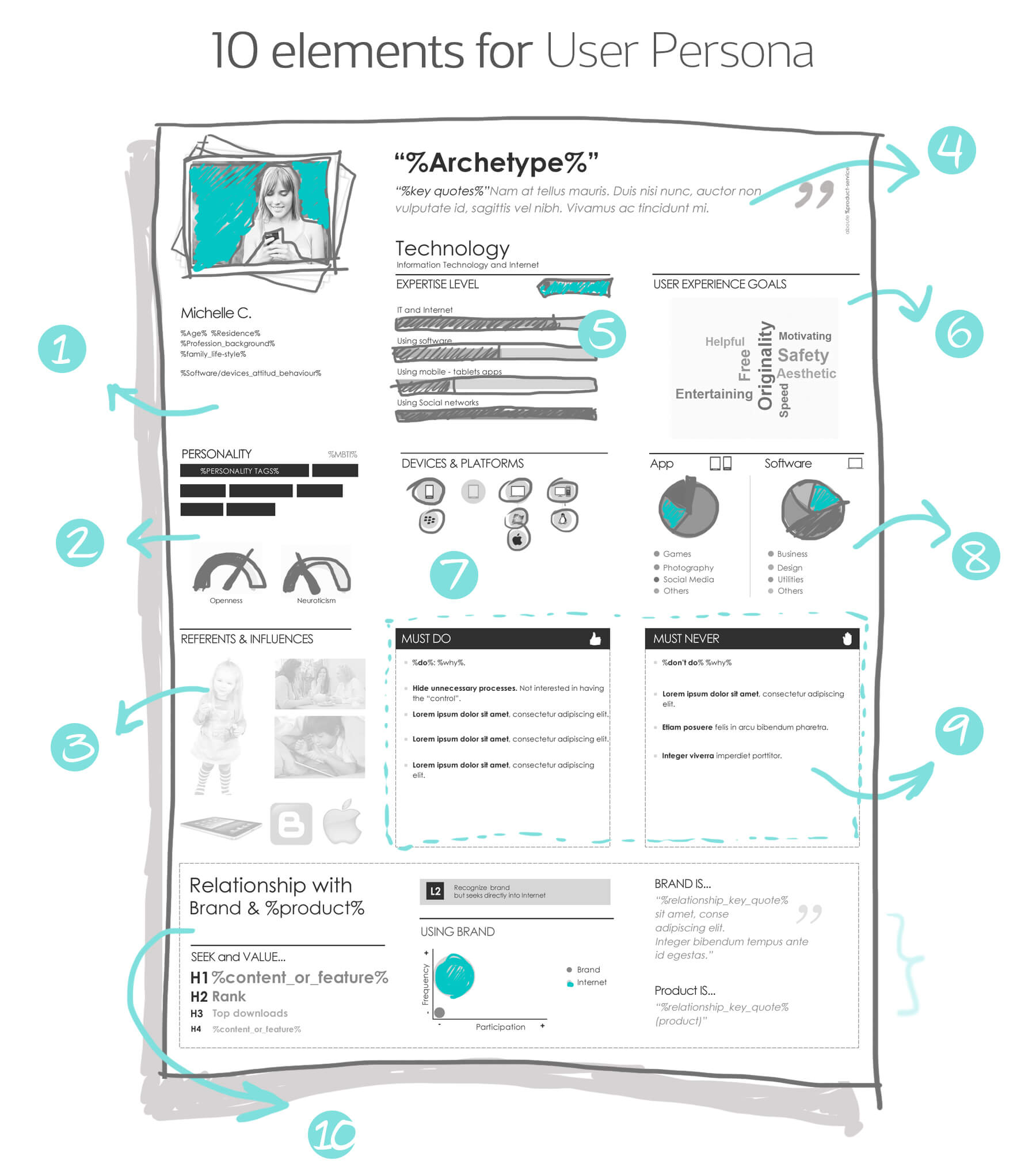
Before diving into strategies for increasing user acquisition, it’s crucial to first lay a strong foundation:
- Clarify Your App’s Message: Your app might serve a valuable purpose, but if your message isn’t clear, potential users won’t understand what you offer. Your tagline is often the first thing people see, so make sure it captures your app’s essence, especially if you’re new to the market.
- Define Your Target Market: Avoid the common mistake of targeting everyone at once. While a broad launch might boost downloads initially, it often leads to high churn rates. Instead, focus on specific demographics—like location, age group, interests, and needs—to ensure your app resonates with the right users.
- Understand Your Competitors: Knowing who your competitors are is essential. Identify apps in your niche by searching relevant keywords in Google and app stores. Study what they offer and where they fall short, so you can position your app to fill those gaps.
Now, with these basics covered, we will look into the 8 ways to boost new user acquisition:
1. Focus on app store optimization
The one mobile user acquisition strategy that has always worked like magic, is app store optimization (ASO). Almost 90% of smartphone users utilize the app store searches to explore apps or browse through the options they have. If this is the search result that you want to be listed in, it’s time to optimize all aspects of your app store description. This includes your app name, subtitle, description, keywords, ratings and reviews, usage metrics, and more. Here are some tips that may help your app become top-rated in the app store and avoid the most common ASO mistakes:
- Read reviews under competitors’ products. This can help you find interesting variations of keywords for your app. By the way, Google Play considers keywords in comments in the ranking.
- A video uploaded to the app store can help you rank higher.
- Change the app description depending on the season of the year.
- Update your app – this will activate existing users and attract new ones.
- Choose the right category for your app. It is quite possible to take a higher place in an adjacent niche than in the main one.
- Do not forget to track the ASO KPIs, such as visibility, conversion rate, mobile growth, user feedback, and monetization.
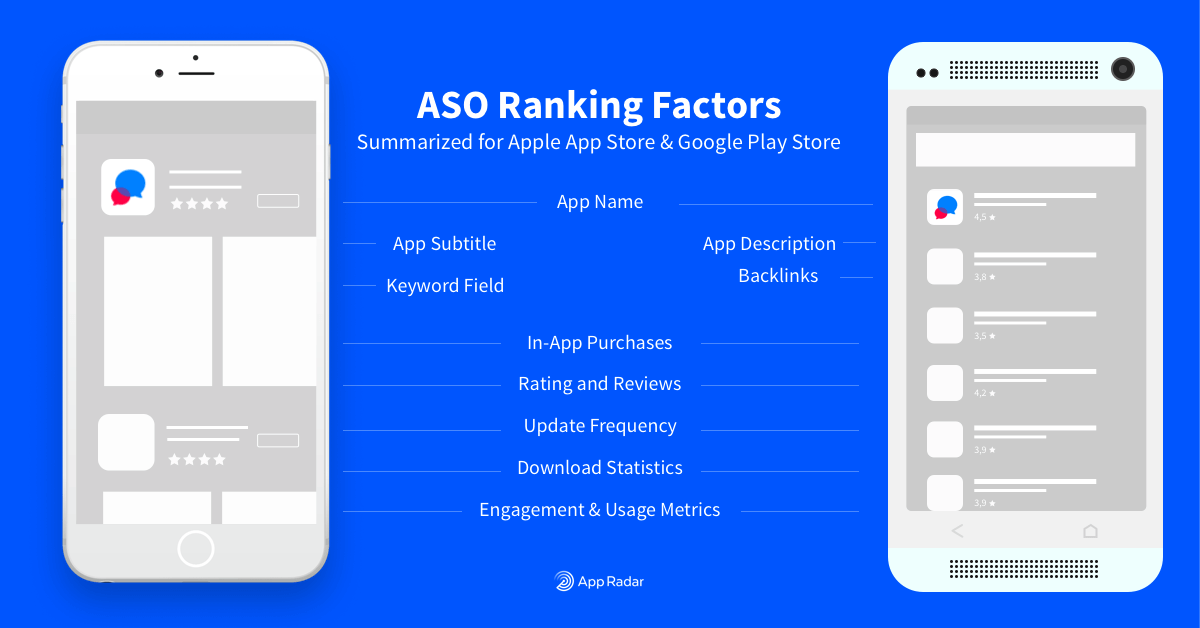
Struggling with ASO? Sign up for App Radar’s free ASO tool!
2. Ask your most loyal users for reviews
If you want your app to be downloaded many times, it needs positive ratings and reviews. This is especially important because the keywords in reviews can impact the app’s ASO. However, not each user would leave a positive rating. If they have good experience with the app, they’d rather not review it at all. But if something goes wrong, the emotions will overwhelm the user, provoking a wish to write a negative review. It’s just human nature.
One of the easiest app review acquisition strategies is asking the users to rate the app.
Timing and presentation are key when asking for reviews. Here’s how to do it effectively:
- In-App Review Requests: Use AI to analyze user behavior and identify the best moments to ask for a review. For instance, after a successful transaction or a completed activity, the app can trigger a review request. Make sure this request is unobtrusive—consider embedding it within the app screen rather than using disruptive pop-ups.
- Personalized Review Prompts: AI chatbots can personalize the review request process. Before asking for a review, the chatbot can ask users if they’re enjoying the app. If the feedback is positive, the chatbot can then prompt them to leave a review. If the feedback is negative, the chatbot can offer to address the issue, potentially turning a negative experience into a positive one.
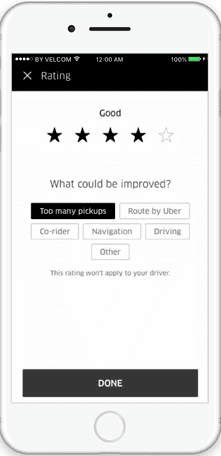
For example, Uber asks users to rate UberPool after they complete a few rides. For ratings lower than 5 stars, the app asks to choose a reason for giving this rating.
3. Use paid advertising
Paid ads can be quite an efficient way to promote your app. Depending on your product’s target audience, you can use the following tools to buy ads:
- Facebook Ads: helps you reach the maximum number of relevant audiences through the world’s most popular social media platform.
- Cross-Promotion Networks: one of the most effective ways to promote game apps, which involves using one app to promote the other.
- Promoted Tweets: helpful when the most part of your audience is active on Twitter.
- App Store Search Ads: based on the app store searches.
4. Tap into the word of mouth promotion – referral marketing
According to Nielsen, 92% of users trust recommendations from their friends and family, over 67% that trust ads or any other content format. That’s why referral marketing is one of the most used and trustworthy marketing tactics.
But to leverage the power of word of mouth, you need to build a viral loop of referrals into your game or app. Here’s what you need to have in place:
- Offer something valuable in lieu of referrals
- Enable easy invite sharing on social media and chat apps
- Reward power users for active participation
- Ensure more value with every session
- Make it a part of the user’s onboarding and in-app journey
Some smart ways to incorporate a referral program into your app or game design is to enable milestone sharing, offer exclusive content, create a multiplayer gamification scenario, and others.
Example: In 2010, the Evernote app launched a referral program that gives points to customers every time they make a referral. It is possible to redeem these points for free access to the software’s premium features. Additionally, each time a customer’s referee upgrades to Evernote Premium, the customer receives extra points.
5. Leverage social media and influencer marketing to the fullest
A mobile user acquisition strategy is incomplete without social media. When 90% of your users are present on at least 2 or more social media channels for personal and professional purposes, why not reach out to them where they are the most active on a daily basis?
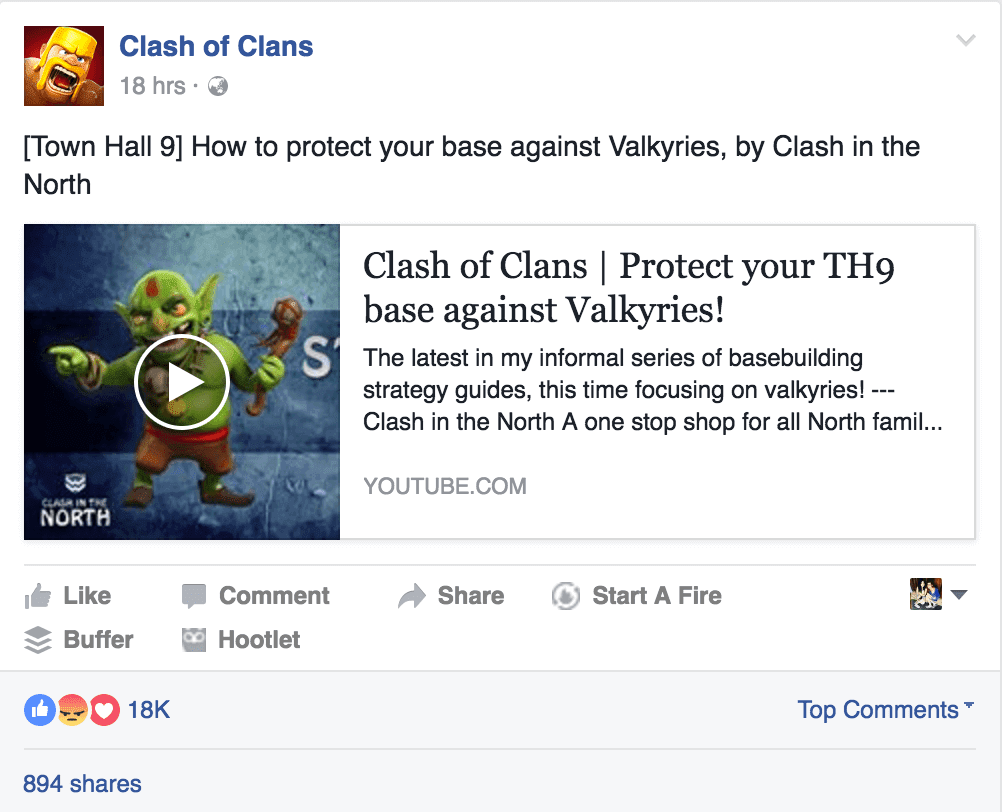
For example, here’s a post by the Clash of Clans game – they use social media to share glimpses from the game, address common questions, or even ask for feedback.
Influencer marketing is a powerful social media tool where brands promote products through influencers—individuals trusted by a specific audience. Influencers typically engage through platforms like Instagram, Facebook, or YouTube. They can be categorized as follows:
- Networkers: Active across multiple platforms, highly recognizable, with extensive contacts.
- Specialists: Experts in a specific field whose opinions are highly trusted, ideal for representing brands.
- Distributors: Focus on sharing content from various bloggers and journalists.
Users: Average consumers with smaller networks but still influential in their own circles.
Example: In 2016, Taco Bell partnered with YouTube prankster BigDawsTV to advertise their special offer – users of the Taco Bell app would receive a 50% discount on their orders if they used Visa Checkout.
6. Offer a demo or freemium model
One hack that always works for both apps and games, is to offer a freemium model. Yes, you want to monetize from your app – but what’s an app without an active community of users?
When the commitment is just about installing an app, the user is more likely to convert. This allows them to experiment with what your app has to offer before they actually pay for it. Similarly, a ‘play before pay’ model for games can give the user a sneak peek into the game and let them decide if they’d like to go for a paid subscription.
What’s more?
Well, free apps also have a higher acceptance rate when recommended to friends and family. A lot of apps like Dropbox, CandyCrush, and others have used similar models that let the user first focus on experiencing the app and then nudge them to the next step.
7. Don’t forget about email marketing
A lot of app developers underestimate the power of email marketing campaigns when it comes to getting more app installs. But as a channel where you can reach your target users on a 1:1 basis, it is where you can get a considerable number of users from.
With up to 70% of emails opened on mobile devices, you can use Smart Links to redirect people to the right app stores. Deep-linked emails don’t just create a seamless channel of user acquisition, but also set the right first impression for your brand. Before you set up your email marketing campaign remember to create a list of verified email addresses – you can use an email finder tool to help you with that.
Example: FreshDirect, a grocery delivery service, promotes their app by using emails that introduce the mobile version and have direct links to the app stores.
8. Convert web users to mobile app users
If you have a website, it is possible to redirect traffic from desktop to mobile and thus acquire more users for your app. Modern solutions such as GetSocial’s Smart Banner and Smart Widget can help you seamlessly integrate app conversion into the desktop experience.

Creating a high converting user acquisition strategy
No matter what channel or strategy you make use of to acquire more users, you always need to use the “measure and optimize” model. There is no one-size-fits-all when it comes to creating a mobile user acquisition strategy for an app or game. You need to experiment, measure, and optimize on the go!
Still, don’t know how to hit virality?
We recommend checking out our case study with Kolibri Games, which sought to increase user acquisition for their game Idle Miner Tycoon. Over the entire journey, from the first implementation to the improvements implemented, Kolibri Games saw a lift of 306% in invites sent and 364% in installs generated.
In addition to traditional tactics, consider integrating customer support features like AI-based chatbots to enhance user experience and retention. Helpshift’s software can help you provide instant assistance, improving user satisfaction and potentially driving higher conversion rates. Check out our Free Trial!