Your support agents are navigating some of today’s toughest customer expectations. Beyond resolving complex issues, they must also ensure customers feel valued and satisfied—all in record time.
While this is doable, maintaining this is hard as your company grows. Traditional support software can be helpful, but it falls short when it comes to scaling, personalization, quick ticket resolution, and designing customized support journeys. As a result, agents become overwhelmed with endless tickets, leading to longer wait times, frustration, and customer dissatisfaction.
This is where conversational AI platforms can help. These solutions automate ticket resolution and support workflows with AI, enabling you to offer highly effective customer support experiences at scale.
And while conversational AI solutions take the load off your support team, choosing the right one for your business can be difficult. In this guide, we’ll walk you through the 10 best conversational AI platforms to help you choose the best one for your business needs.
What is a conversational AI platform?
A conversational AI platform simplifies the creation and deployment of conversational virtual assistants that engage in natural, human-like conversations with users. These platforms leverage natural language processing and machine learning to understand intent, sentiment, and context to personalize customer interactions at scale.
Top 10 Conversational AI Softwares: A Quick Overview
| Name of the product | Pricing | Key features (3 or 4) | G2 ratings |
| Helpshift | Starts at $150 for basic plan |
| 4.7 |
| Google Dialogflow | Available on request |
| 4.3 |
| Drift | Starts at $600 per month for 10 seats |
| 4.4 |
| IBM Watson Assistant | $140 per 1000 users |
| 4.2 |
| Yellow AI | Available on request |
| 4.5 |
| Kore.ai | 20¢ per conversation for the Standard pack |
| 4.4 |
| Amazon Lex | Pay as you use |
| 4.0 |
| Tars | Starts from $99 per month |
| 4.6 |
| Boost.ai | $140 per 1000 users |
| 4.6 |
| LivePerson | Starts at $59 per month per user |
| 4.2 |

Top 10 Best Conversational AI Solutions
1. Helpshift
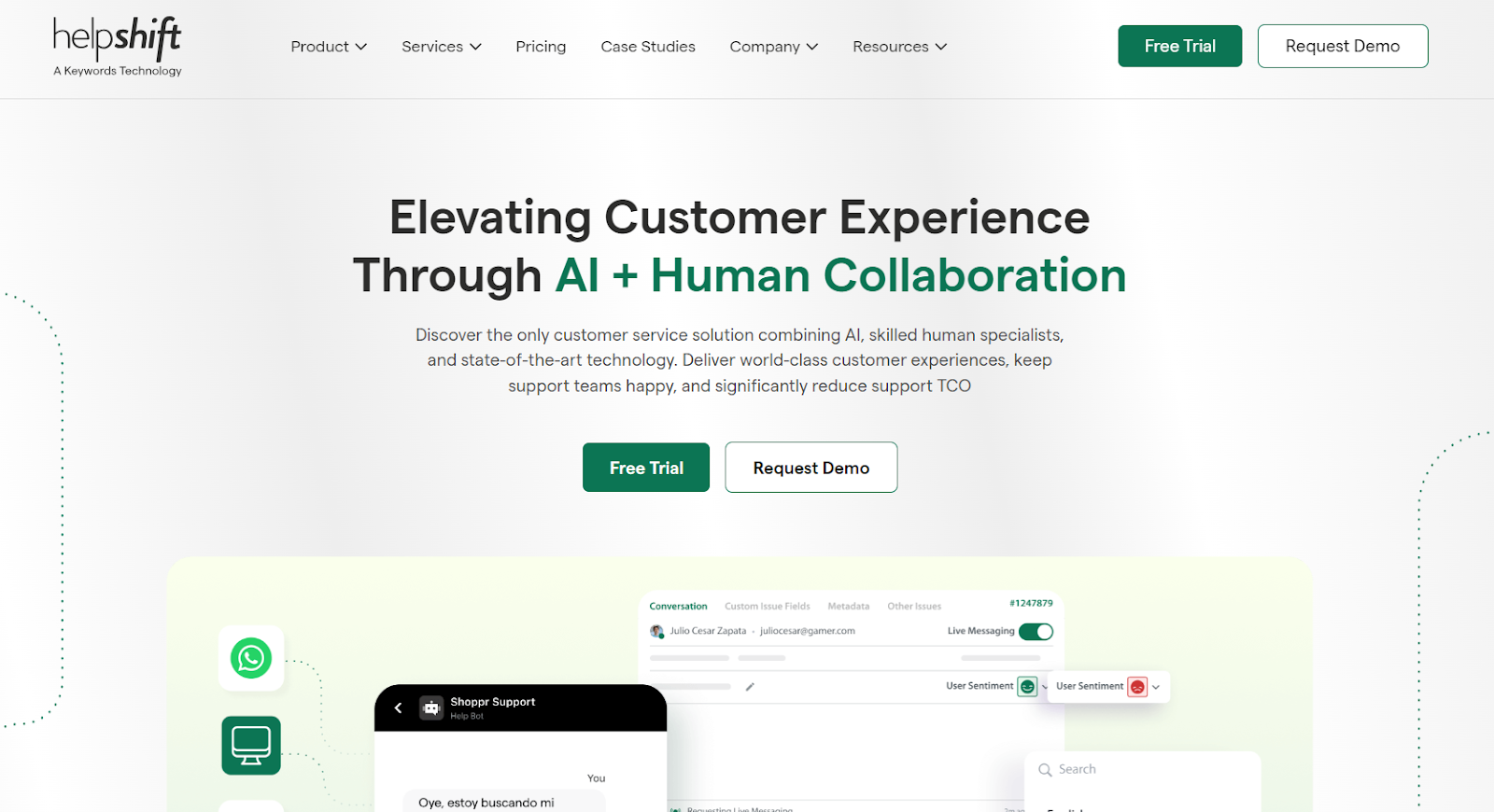
Powered by AI to resolve tickets faster Helpshift is one of the best conversational AI platforms for any business.
Helpshift combines AI-powered intent classification, sentimental analysis, and intelligent routing systems to automate and resolve 70% of customer queries, lower turn-around time, and build a seamless self-serve experience for your customers. This means that customers can interact with the conversational AI at any point in the support journey and receive personalized answers.
Helpshift’s conversational AI, powered by its Intent AI, comprehends customers’ queries and suggests relevant answers based on your support content.
While Helpshift’s Conversational AI and automation effectively resolve 70% of customer queries (check out our case studies), it can transfer conversations to human agents for complex issues that need a human touch.
Key features
Gen AI-powered answers
Helpshift uses Generative AI technology and Retrieval-Augmented Generation (RAG) technique to generate accurate answers to customer queries. This makes it a more reliable automation solution compared to traditional rule-based bots which rely on predefined rules and programmed logic to perform specific tasks. Helpshift’s conversational AI is enhanced by RAG so that the AI can learn from your content to provide on-brand customer experiences.
Intent, Language, and Sentiment detection
Customers initiate conversations, believing whoever’s on the other end will understand their pain points and provide the best solutions. Helpshift’s Intent AI jumps into action to make this possible.
As customers engage with Helpshift’s conversational AI, our patented Smart Intent technology kicks in to classify incoming tickets based on intent, language, and sentiment. Intent AI can be pre-trained to understand issues specific to your industry. During customer interactions, the conversational AI provides a menu of the most common issues for the customer to self-serve. This enables customers to type their queries and get quicker resolutions without the need to have lengthy conversations with the AI. The AI also learns from previous ticket resolutions and routes similar tickets to the most appropriate agents for prompt assistance.
Multilingual AI
Leveraging Helpshift’s Language AI feature, the conversational AI immediately understands customer intent across multiple languages and adjusts response accordingly. Language AI also translates Help Center articles with a single click to make them accessible to a global audience, eliminating the need for a third-party translator.
Helpshift’s Complete Bot Toolbox
- Custom bots: Custom bots are bespoke automated programs specifically crafted to meet your unique customer support needs. They are tailored to handle specialized workflows and processes, ensuring personalized interactions and efficient resolutions.
- Identity bot: Identity bots verify customers’ names and contact information easily and are configurable for web chats and in-app messaging.
- Quick search bot: The Quick Search Bot provides article recommendations to customers, closely relevant to the issue they enter on the in-app or web chat. This enables them to quickly find answers for the problems, instead of manually scouring through numerous FAQ articles or having long conversations with bots.
- Feedback bots: Feedback bots engage customers post-resolution to confirm customer satisfaction and capture feedback. If unsatisfied, customers are prompted to reopen the resolution until fully satisfied. Feedback bots also provide detailed CSAT analytics to measure and understand customer ratings.
Pros
- Omnichannel approach
- Unified dashboard for simplified management of customer conversations across channels.
- Reduces workload with comprehensive AI-driven automation
- Enhances customer experience through seamless in-app support
- Scales efficiently due to AI-enhanced ticket resolution
- Automates ticket triage using AI and automation
Pricing
- Starter plan: $150 per month. It comes with a 30-day free trial.
- Growth plan: Customized based on your team’s needs
- Enterprise plan: Customized based on your team’s needs
G2 rating: 4.7 out of 5 stars
2. Google Dialogflow
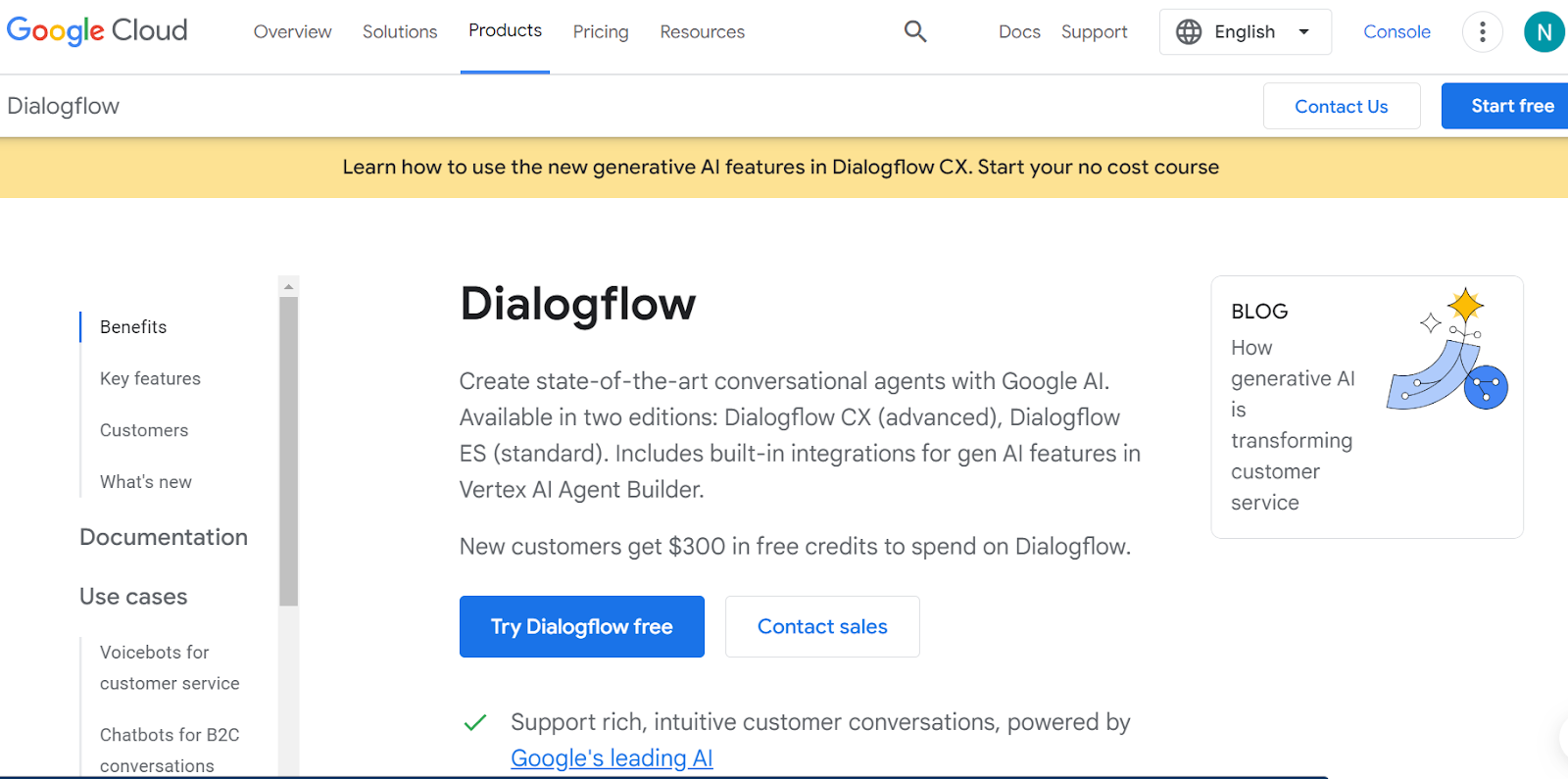
Google Dialogflow is a top-notch conversational AI platform that empowers organizations to develop chatbots and virtual assistants for messaging platforms, mobile apps, and websites. This extensive tool encompasses multi-channel support, natural language understanding, and sentiment analysis.
Key features
- Scalability
- Monitors user interactions using detailed analytics
- Integration with Cisco and Avaya
- Natural language processing capabilities
- Compatibility across multiple apps
Pros
- User-friendly interface
- Enhances user experience by managing conversation context to maintain the flow of dialogue.
- Robust integration with Google Cloud services
- Seamless integration across multiple platforms
Cons
- Difficult to customize
- Steep learning curve
G2 rating: 4.3 out of 5 stars
3. Drift
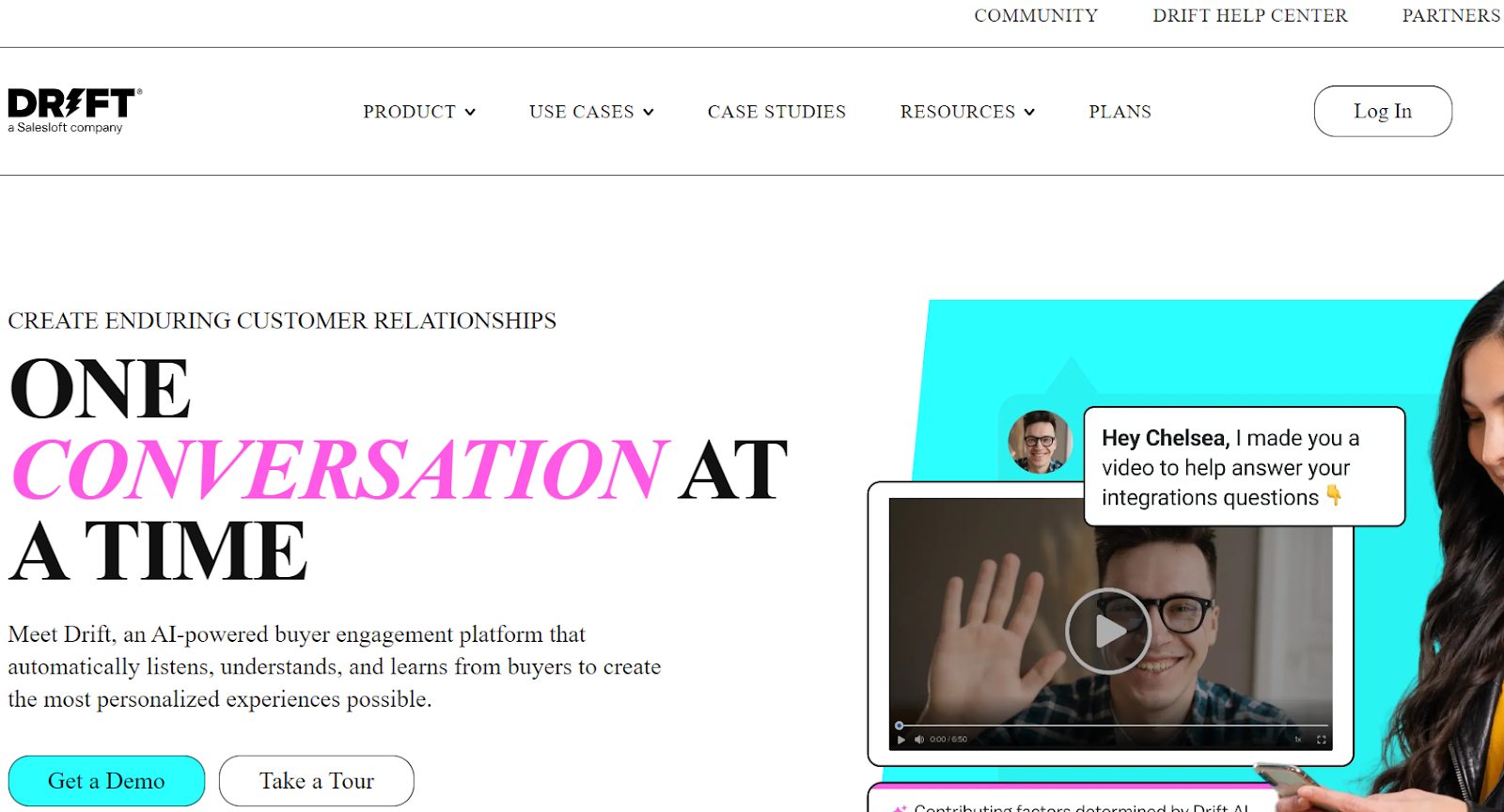
Drift is a conversational marketing and sales platform focused on helping businesses have real-time engagement with website visitors. This conversational AI platform enhances customer conversations through email automation, live chat, and chatbots. With Drift, businesses can improve conversion rates and streamline the customer journey, which is especially beneficial to customer support, marketing, and sales teams.
Key features
- Automates conversations using chatbots before handing them over to human agents.
- Conversational sales and marketing strategies through customizable scripts and workflows to guide sales reps during conversations.
- Email marketing automation
- Integrates with popular CRM systems like Hubspot and Salesforce
Pros
- Real-time chat and AI-driven bots for enhanced customer engagement.
- Automates lead generation
- Integrates with CRM and marketing tools to streamline data flow.
Cons
- Pricing plans can be expensive for smaller businesses
- Advanced customization requires technical expertise.
G2 rating: 4.4 out of 5 stars
4. IBM Watson Assistant

IBM Watson Assistant is one of the top AI-powered virtual agents in conversational sales and marketing. It helps businesses build conversational AI platforms across various channels, including voice assistants and chatbots. This conversational AI software leverages IBM’s advanced AI and natural language processing capabilities to improve customer experiences.
Key features
- Understands user intent through natural language understanding
- Omnichannel deployment
- Allows businesses to create custom conversational flows to fit their unique needs.
- Improves responses over time through machine learning and user feedback.
Pros
- Leverages IBM’s powerful AI technology for context-aware and accurate interactions.
- Suitable for large organizations with complex requirements
- Seamless experience across multiple channels.
Cons
- It is best used within the IBM cloud ecosystem, which can be limiting for most businesses.
- Complexity in using advanced features.
G2 rating: 4.2 out of 5 stars
5. Yellow AI
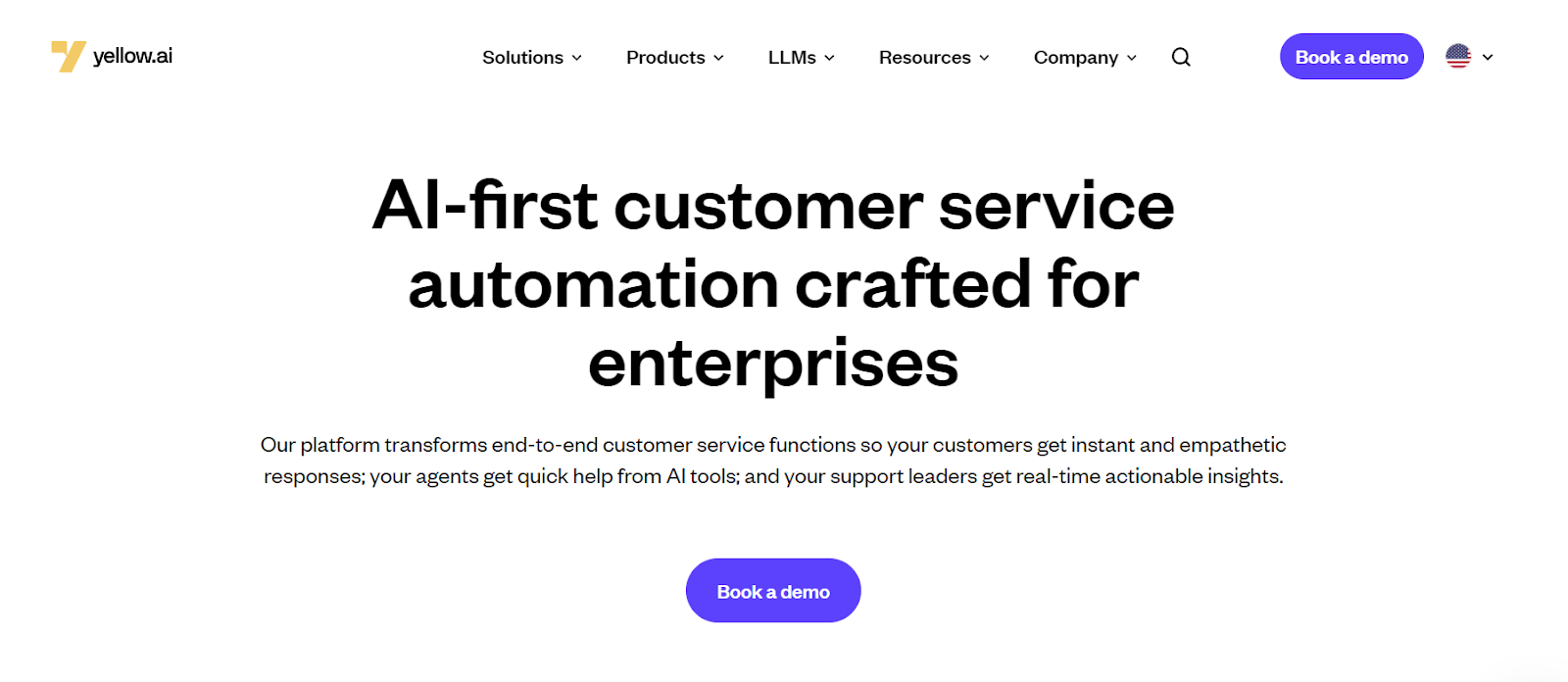
Yellow AI is a comprehensive conversational AI platform that automates customer engagement using AI-driven communication channels like voice bots and chatbots. It leverages machine learning and advanced AI technologies to provide seamless interactions that streamline business processes and enhance customer experiences.
Key features
- Advanced natural language processing
- Omnichannel support for a unified customer experience
- Allows businesses to design custom workflows
- Tracks conversation metrics, including user satisfaction, resolution rates, and response time.
Pros
- Seamless integration with popular CRM and third-party systems.
- Contextual understanding
- Detailed insights and analytics
Cons
- Lack of transparent pricing
- Learning curve during the implementation of integration capabilities
G2 rating: 4.5 out of 5 stars
6. Kore.ai

Kore.ai is a top conversational AI platform designed to help organizations create and manage virtual assistants for their business processes.
Key features
- HR Assist for managing employee conversations
- Users can create AI conversation bots using a simple drag-and-drop builder.
- Intent recognition
- Multi-language support
Pros
- Easy to deploy across multiple platforms
- Leverages NLP capabilities to understand and interpret user input
- Supports deployment across multiple channels including messaging platforms and mobile apps.
Cons
- Steep learning curve
- Overly complex documentation
G2 rating: 4.4 out of 5 stars
7. Amazon Lex

Amazon Lex is a conversational AI platform provided by Amazon Web Services that helps developers build conversational interfaces using text and voice. It leverages deep learning technologies that offer automatic speech recognition capabilities and robust natural language understanding—the same technology powering Amazon Alexa.
Key features
- Speech recognition for authentic conversations
- Integration with other AWS services
- User authentication and authorization
- Intent understanding
Pros
- Supports deployment of bots across multiple platforms, including Slack, Facebook Messenger, and websites.
- Supports encryption and high levels of data privacy.
- Converts spoken language into text for voice interactions.
Cons
- External website integration can be challenging
- High level of AWS dependency.
G2 rating: 4.0 out of 5 stars
8. Tars
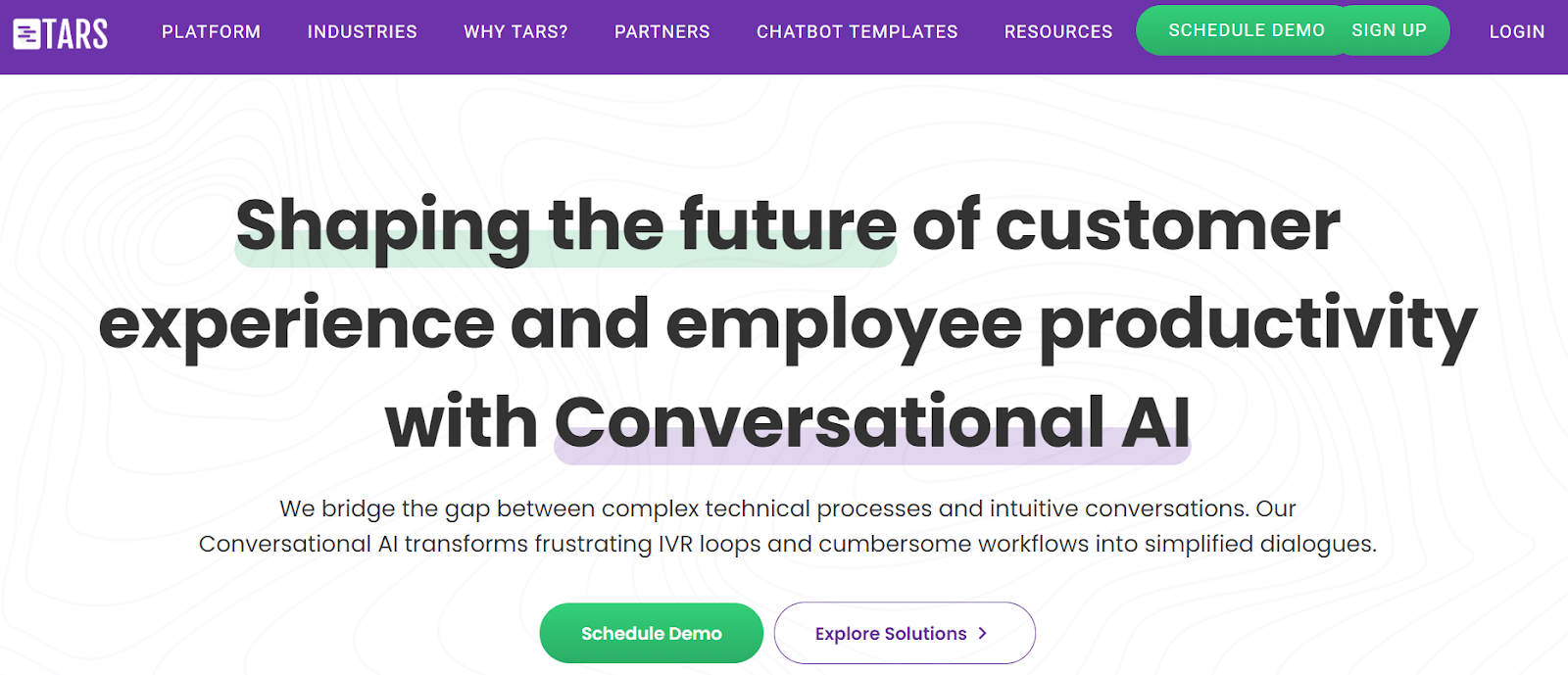
Tars is a conversational AI platform that enables businesses to create chatbots for various purposes, including user engagement, lead generation, and automated self-service support. This tool streamlines customer service operations by simplifying the creation and management of chatbots. Its intuitive interface requires no coding skills, making it accessible to businesses of all sizes. This is ideal for small to medium businesses looking to automate tasks without advanced technical knowledge.
Key features
- No-code bot builder
- Interactive chat-based forms for lead generation
- Omnichannel support
- Analytics and Reporting
Pros
- User-friendly interface with no coding required.
- Pre-built templates speed up the deployment process.
- Valuable insights through comprehensive analytics
Cons
- Pricing may be too steep for small businesses
- Not easily scalable for larger organizations.
G2 rating: 4.6 out of 5 stars
9. Boost.ai
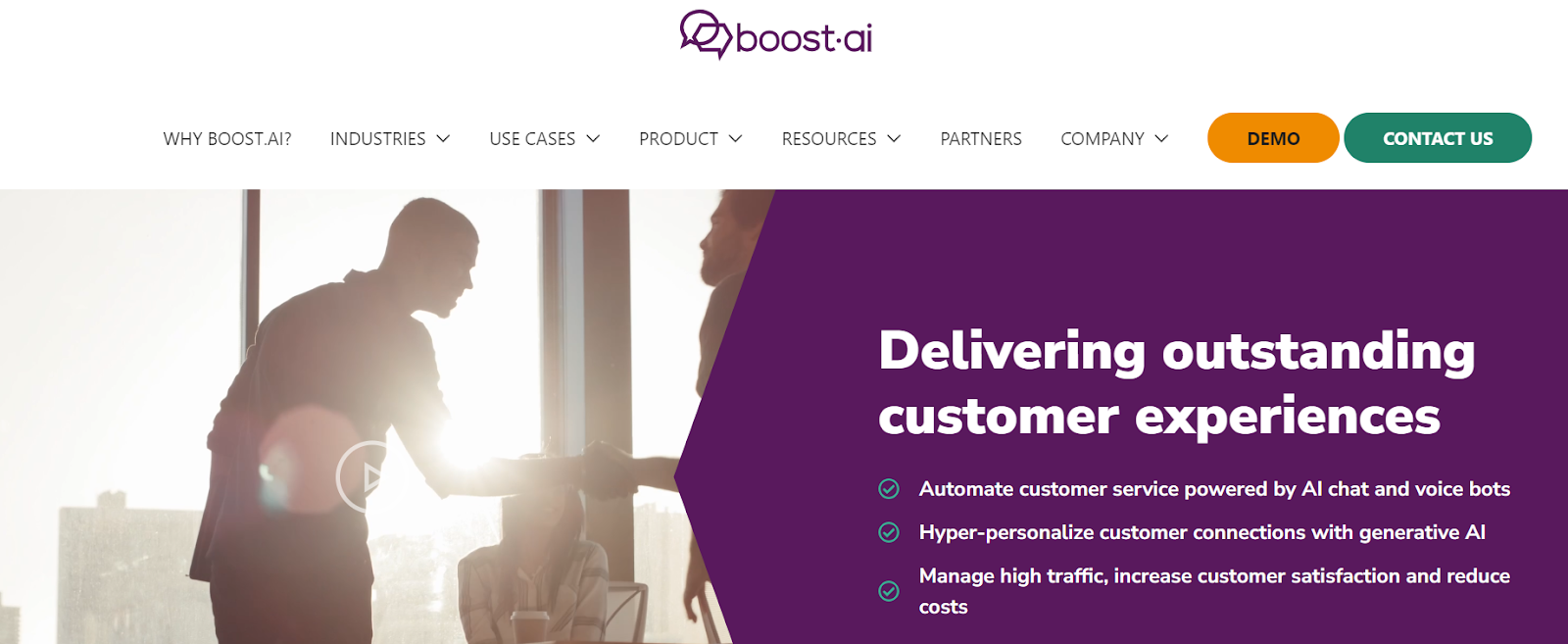
Boost.ai is a conversational AI platform that creates intelligent virtual assistants for personalized customer experiences and engagement. It uses machine learning and advanced natural language processing to provide scalable conversational flows that help organizations automate customer conversations.
Key features
- Self-learning AI to simulate human conversation.
- Deploys virtual agents across multiple platforms
- Advanced NLP for understanding user intent
- Delivers actionable insights into customer behavior using key performance metrics.
Pros
- It can handle high interaction volumes with great quality
- Accurate and context-aware conversations
- Improves over time to understand human language better.
Cons
- Initial setup can be technical
- High pricing for smaller businesses
G2 rating: 4.6 out of 5 stars
10. LivePerson
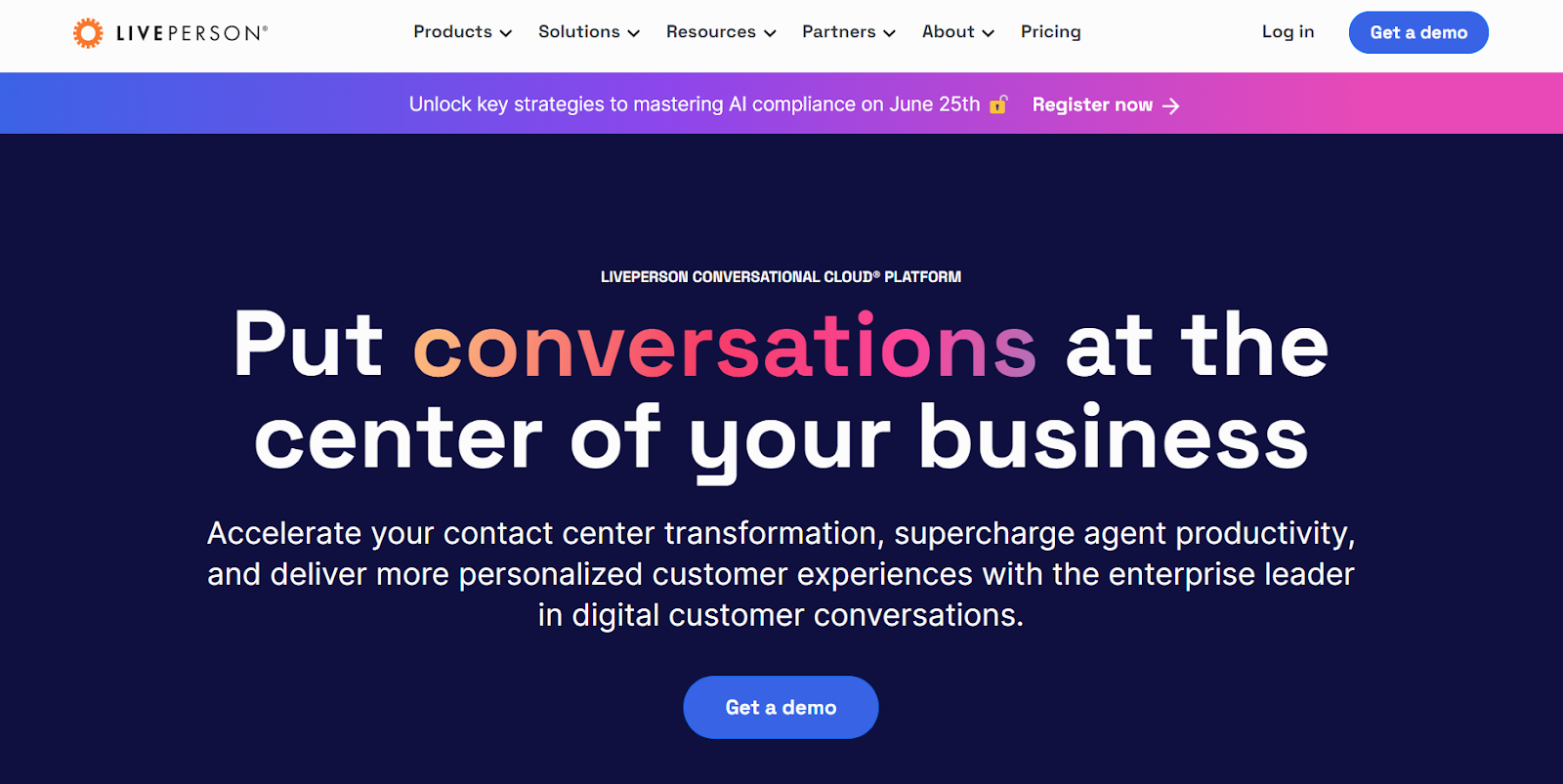
LivePerson is one of the top conversational AI systems. Its tool, Conversational Cloud, uses generative AI and large language models (LLMs) to drive better business outcomes. Therefore, businesses can leverage a great mix of AI bots, human agents, and intelligent automation to respond promptly to customer inquiries with relevant responses.
Key features
- Customer interactions across multiple communication channels.
- Conversational intelligence
- Connects with CRM in existing systems to streamline operations.
Pros
- Agent Assist, which improves the efficiency of human agents.
- Integrates seamlessly with various CRM systems
- Consistent customer experience through omnichannel support
Cons
- Some advanced customization may require extra resources.
- New users may struggle with using its features effectively.
G2 rating: 4.2 out of 5 stars
How to choose the right Conversational AI Platform
Knowing what to look for when choosing a conversational AI platform will help you make the right choice.
Integrations
The last thing you want is to deal with a conversational AI platform that doesn’t work with your existing technology stack. Choose a conversational AI platform that integrates seamlessly with your website, CRMs, etc,.
Ease of use
Does the platform have an easy learning curve with intuitive, no-code conversational interfaces? An easy-to-use conversational AI platform must increase agent productivity and morale.
Scalability
As your business grows, so should your conversational AI platform. Choose one that can handle increasing customer interactions without compromising performance of your agents. The platform shouldn’t exponentially increase in cost when you want to subscribe to additional features and add-ons to deal with higher ticket volumes.
Conclusion
We’ve explored the top ten conversational AI platforms and how their unique features can enhance customer interactions and improve operational efficiency. Remember that choosing the right conversational AI platform requires attention to key factors. These include technical expertise, your business needs, integrations and cost.
Helpshift stands out for its strong focus on providing a unified customer experience where teams can manage all customer interactions using detailed analytics and insights to optimize your sales and marketing strategies. All these make this tool a strong contender for businesses looking to enhance customer support and engagement.
But don’t take our word for it. Sign up for free today!
Check Delivering of Better Player Support with Helpshift and Generative AI

FAQs
What makes the best conversational AI platform?
An AI platform can be considered the best based on several important attributes. One of them is offering advanced NLP capabilities to enable conversational AI platform software to understand user intent and context accurately. It should also have robust tools for training virtual assistants and support multi-channel communication.
What is the difference between generative AI and conversational AI?
Conversational AI tools are better tailored to understand human communication. Generative AI solutions like ChatGPT can provide outdated responses and pose significant data privacy risks. However, conversational AI uses speech recognition and natural language understanding to conduct more authentic conversations with humans.
How do conversational AI tools work?
Conversational AI tools work by processing user inputs through natural language processing to understand user intent and context. These inputs can be text or speech. This software then uses machine learning to process human language and generate appropriate responses.