
With more and more mobile apps conquering the market, it becomes harder for app developers to stand out among competitors. Nowadays, people, especially millennials and generation Z, tend to get bored quite easily. Therefore, only something exciting and challenging can keep them constantly engaged.
Luckily, there is a bunch of user engagement and retention strategies to implement: social media management, in-product customer experiences, personalized discounts, giveaways, etc., which can help companies remain competitive. But in this article, we are going to talk about gamification as one of the most powerful user engagement methods.
You may not notice but you can find examples of gamification in your daily or professional life (e.g. in recruiting), not only in mobile apps. For instance, teachers can reward their students with stickers. Some shops can give their customers a certain number of stickers depending on the amount they spent, so the customers can later exchange those stickers for a promoted product. Some supermarket checks can participate in a contest with prizes. Such techniques encourage students to accomplish tasks and shoppers — to use exactly this store, so they can participate in a contest. This is how gamification works in real life. And today, more and more mobile apps are also aiming at gamifying their users’ lives.
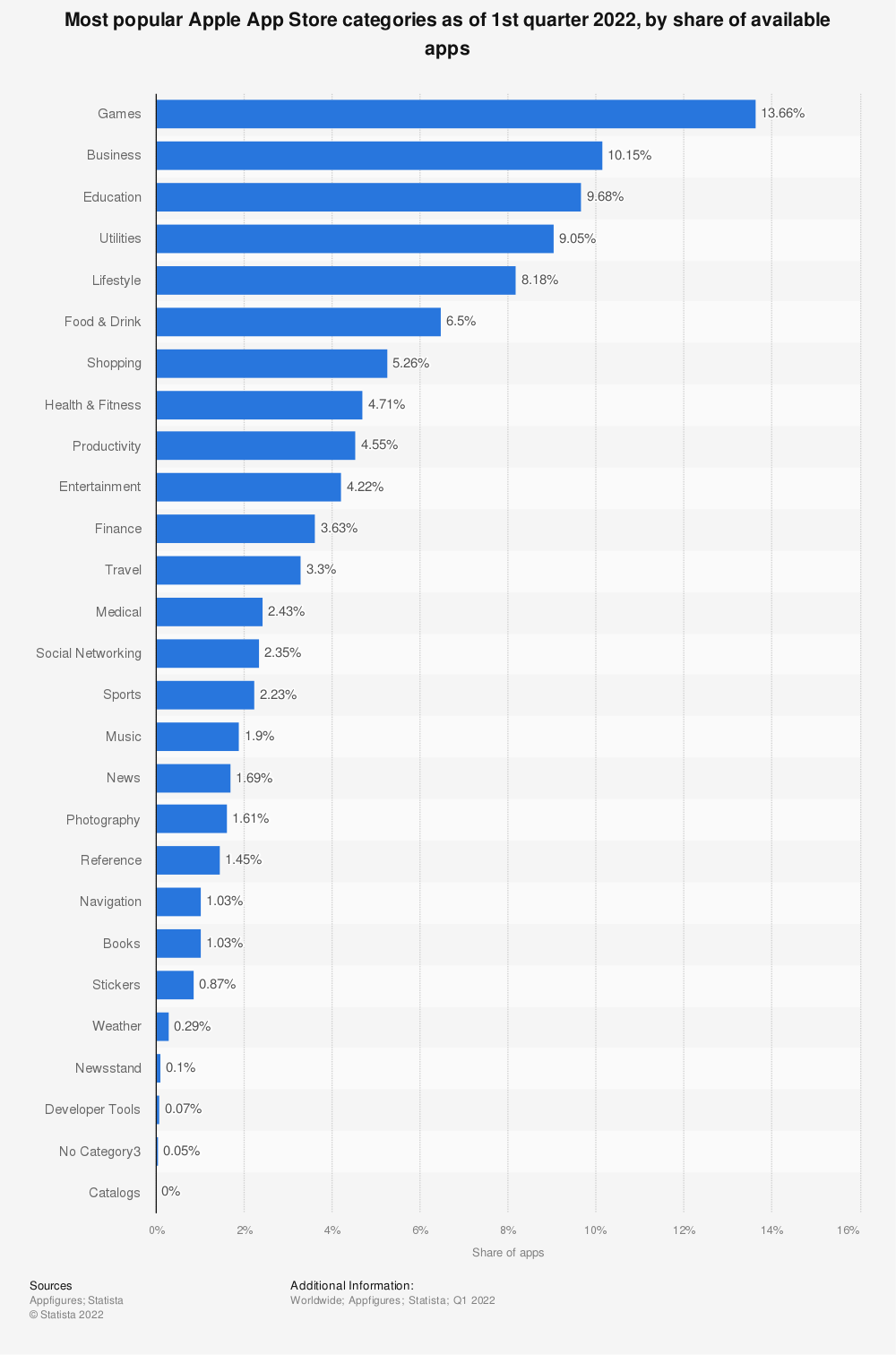
According to the reports, there are over 2.2 billion active mobile gamers worldwide as of 2022. Another report shows that games remain far ahead of other Apple App Store categories in 2022. Specifically, 13.66% of apps belong to the gaming category, followed by business, which is 10.15%. Therefore, it is not a surprise that many apps from other categories are actively borrowing game design elements like badges, rewards, points, scoreboards, internal currency, levels, etc. for their marketing strategies. To keep on track with your marketing efforts it is important to always check your progress and improve your channel marketing.
Why Gamification in App is Important?
Before you decide to gamify your app, you would want to learn which benefits mobile app gamification will bring your business and how it can help you increase user engagement.
Let’s start with some scientific facts. The Wall Street Journal article about video games refers to the 1998 study by Matthias Koepp, now a neurology professor at the University College London Queen Square Institute of Neurology. In his study, Professor Koepp found out that as the adult players were progressing through the game and encountering more difficult challenges, their brains were releasing more dopamine. Therefore, we can draw a conclusion that game elements in non-game apps also release dopamine in the users’ brains. As a result, they want to interact with the gamified app longer in order to get more achievements and enjoy the feeling of accomplishment. In other words, gamification has the power of triggering various human emotions.
Additionally, here’s how gamification can influence and motivate people:
- It awakens curiosity. Curiosity helps to motivate users, so they can move forward and get more rewards.
- It fosters competition. Scoreboards with the achievements of other users encourage the players to accomplish more and compare their results with others.
- It creates a sense of control. No one likes to be forced to do something. That is why the key purpose of gamification is to give the users control and let them decide which milestone they are going to complete next.
9 Best Examples of Apps Using Gamification for User Engagement
Gamification is now present in apps from many industry sectors. Examples include e-commerce, e-learning, fitness, productivity, finance, sales, and much more. Let’s get down to the facts and take a look at examples of apps that have successfully implemented gamification for user growth and engagement.
Gamification in e-learning apps
Getting new knowledge is no longer associated with boredom and routine. With the emergence of the Internet, mobile apps, and gamification, educational activities have transformed into e-learning — using technological processes to facilitate learning and turn it into an exciting experience. Here are some of the most popular gamified apps from the e-learning sector:
1. Duolingo
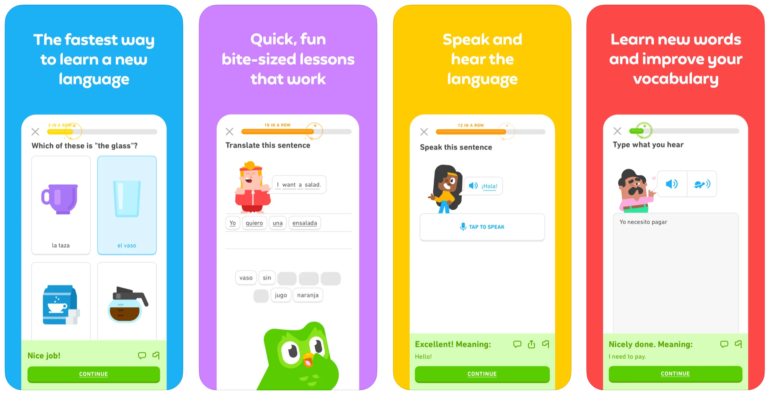
This language learning app uses the following gamification features:
- Internal currency — lingots — which the user can earn for completing various activities.
- Social interaction — the ability to collaborate with friends invited via Facebook.
- Competitiveness — the ability to vote on the best translation provided by users.
- Badges awarded for achievements such as completion of a certain number of skills, following a certain number of friends, spending a certain amount of lingots, etc.
- Point-based rewards and a scoreboard.
2. Codecademy Go
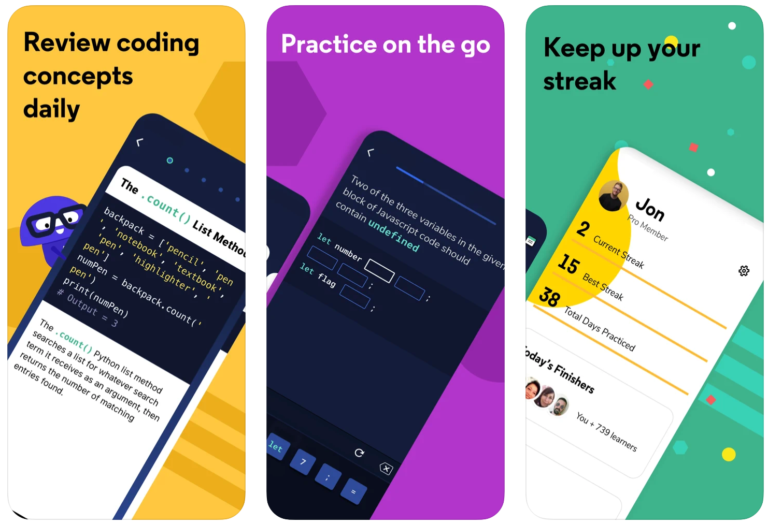
Codecademy is an online platform that teaches software development and coding. In 2018, the company released a mobile app called Codecademy Go. The platform uses these elements to gamify the app:
- Badges awarded for mastering specific stages of certain skills. Currently, there are four types of badges – for the completion of exercises, courses, specific courses, and promotion badges.
- Progress dashboard that shows the completed lessons as well as the next ones.
- Points are given per each completed exercise.
4. Khan Academy
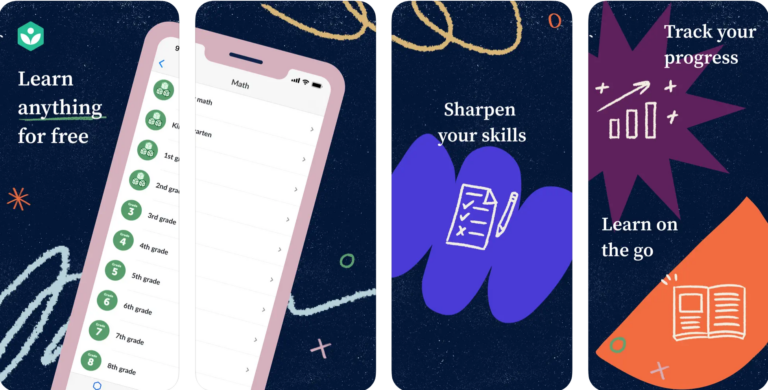
This is an educational app that you can use to learn almost everything, from history to science. Here’s how it gamifies the learning process:
- Skill tree. The subjects that you can learn on Khan Academy are organized as a visual constellation, so the user can clearly see their learning path.
- Badges. The app offers a huge selection of badges that are themed as planets and celestial bodies. Depending on the level of subject complexity, the badges are divided into the following categories: Meteorite, Moon, Earth, Sun, Black Hole, and Challenge Patches. Badges under each category have the corresponding fun, geeky names: Mad Scientist or Geek of the Week.
- Progress dashboard and points. The app shows your progress as a galactically themed achievement system and awards energy points for the completion of levels and getting badges.
Gamification in productivity apps
Productivity apps help us to gamify our daily routine and live our lives more efficiently. Such apps use gamification to remind us of the important tasks that we tend to postpone. These reminders are built in such a way that they are not annoying but are rather an invitation to complete a challenge. Now let’s proceed with some examples of mobile app gamification in productivity apps.
5. Todoist
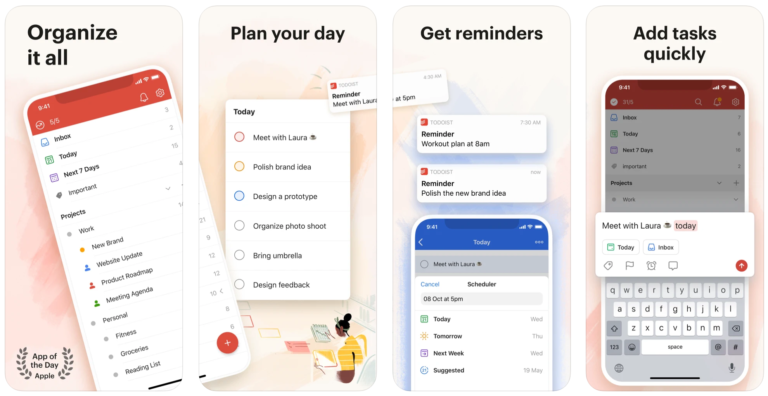
This app helps users to complete all types of tasks, from minor daily chores to major work projects, in the following way:
- Point-based reward system. For each completed task, the app rewards the user with karma points. There are even negative karma “rewards” for missed deadlines.
- Levels. A certain amount of karma points unlocks the next levels.
- Social engagement features. The users can share their karma score with friends on social media.
6. Habitica

The purpose of this productivity game app is to help people adopt new habits in the form of fun and exciting quests. The app uses the RPG games mechanics — for example, players can create characters, unite into guilds, and defeat monsters. The gamification features here are as follows:
- Internal currency/rewards. For each completed task, the users get different rewards: XP, HP, and gold.
- Competition. The players can compete with each other in challenges.
- Learning. After the users complete tasks, they can learn new concepts.
7. Forest
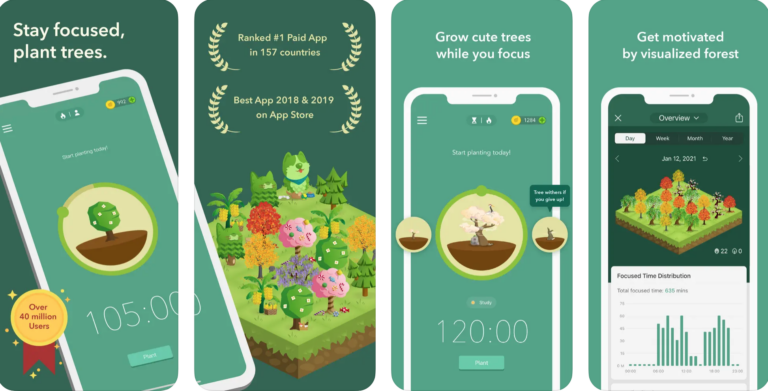
This gamification example app uses tree planting as the key gamification concept. It helps you stay focused on your tasks without distractions like social media. While you are working on a task, you “plant a seed” that may grow into a mighty tree. Or may not — if you succumb to temptation and interrupt the activity, the tree will wither. The more focused you are, the more trees you can grow, and eventually they can turn into a forest.
Gamification in fintech apps
This gamification example app uses tree planting as the key gamification concept. It helps you stay focused on your tasks without distractions like social media. While you are working on a task, you “plant a seed” that may grow into a mighty tree. Or may not — if you succumb to temptation and interrupt the activity, the tree will wither. The more focused you are, the more trees you can grow, and eventually they can turn into a forest.
8. Mint
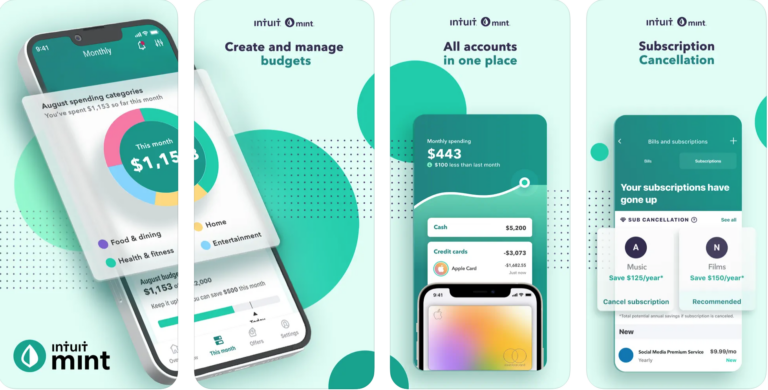
Mint is a budgeting app that can be used as a subscription manager and a tool to help you track your money spending. It is easy to reach your financial goals with personalized insights and custom budgets.
9. Monefy
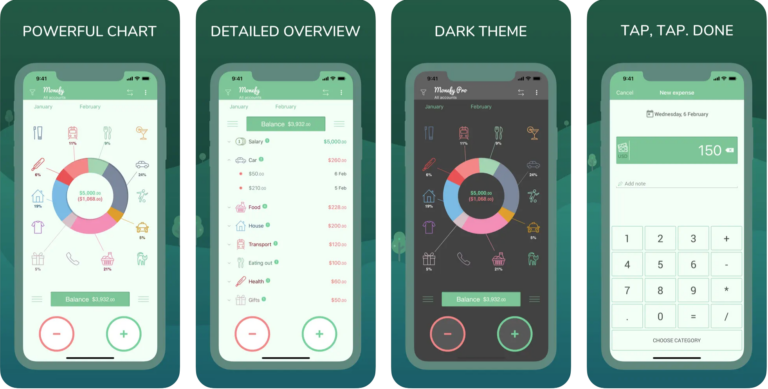
Monefy is a personal finance app that is aimed at making money management easier. The app’s design encourages users to keep tracking their daily expenses on a regular basis and see the patterns in their expenditures that they wouldn’t be able to notice otherwise.
Gamification in healthcare apps
The healthcare app industry is quite broad and may include fitness and nutrition, medication, emotional health, rehabilitation apps, etc. We’ve selected some examples that have gamified their apps and that we consider most remarkable.
10. Fitbit
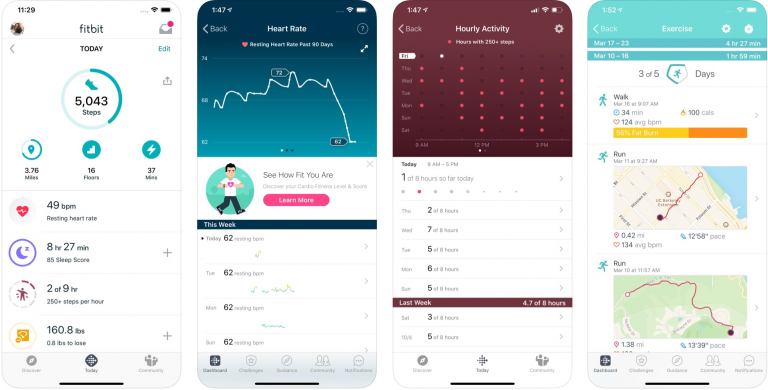
Fitbit is a wearable fitness tracker that is connected to an app with the following gamification features:
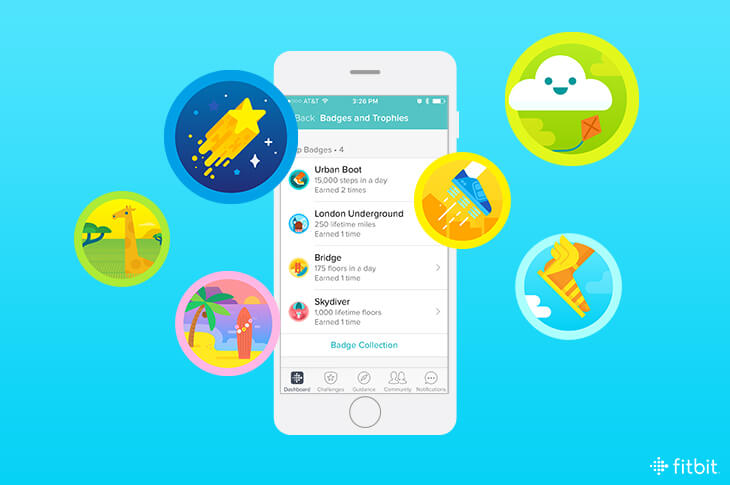
- Badges. When the user completes a certain activity, e.g. walks a certain number of steps throughout the use of the app, they get a badge in the form of measurable achievement. For example, the Serengeti badge is awarded for 500 miles, which corresponds to the distance of the Serengeti National park.
- Social engagement. You can find your friends who are also using Fitbit and compete with them in various sport-related challenges.
- Original challenges. With Fitbit, you can virtually walk around the city of your choice. In such a way you can both “explore” a new city and stay fit.
11. MySugr
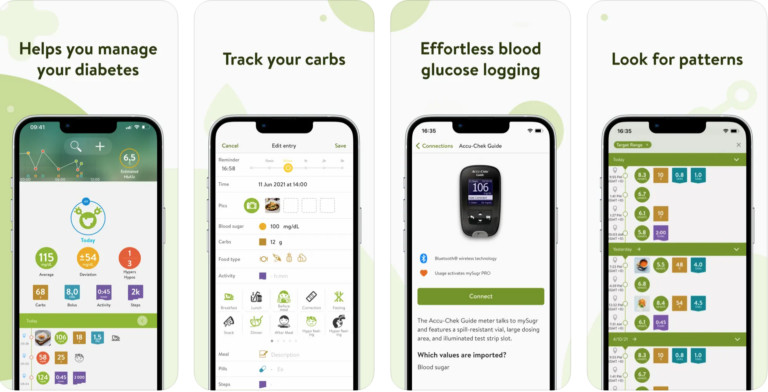
This healthcare gamification app was created especially for people who have diabetes. There is also a version for children — MySugr Junior. The Tamagotchi-like app depicts the disease as a monster that should be tamed. Diabetes patients should constantly keep track of their eating habits and sugar levels, which can be quite boring. MySugr can turn this dull routine into an exciting experience, with all necessary mobile app gamification elements such as progress tracking and rewards.
12. Mango Health
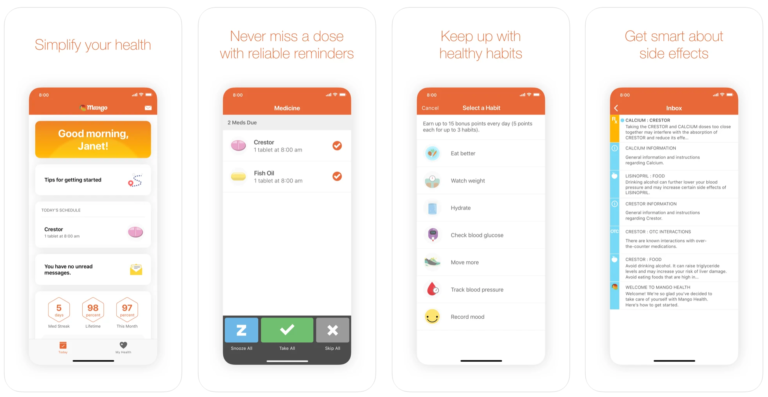
This app reminds patients when it is time to take their medication and records each taken dose. What makes it different from other gamification apps is that Mango Health gives its users real-life rewards — store discount coupons. Other game-like elements are internal currency that users can earn for taking their medicine on time and social features, e.g. comparison of medication adherence against patients with similar conditions.

How to add gamification to an app?
To implement gamification in your app, you need to start with the design elements, and then proceed with the gamification workflow. The design elements are typically as follows:
- Badges. These are a visual representation of users’ achievements, which indicate their performance within the app. For example, some fitness trackers introduce badges based on the number of steps that the user has walked throughout the use of the fitness app.
- Levels. These are the parts of the game world. With each level, the complexity of the game increases, challenging the user to get further.
- Performance charts. These graphs show how the player performed in comparison with their previous results and track their individual records.
- Points. These are basic rewards that the user gets for their accomplishments as they progress within the game.
- Scoreboards. These are lists with player rankings that help to define who performs best in a certain activity. Unlike performance charts that show the performance of one user within a certain time period, a scoreboard shows the performance in relation to the performance of others.
- In-game currency. This is the means of “payment” for game-related benefits — extra lives. The player can get this currency as a reward for certain accomplishments or as a daily bonus.
You can implement these elements with specialized gamification software. To name a few: Amazon GameCircle, Apple’s Game Center, or Google Game Services.
However, a successful mobile app gamification strategy is not just about design and development. Its main goal is to engage and retain more users, and here’s how it can be achieved:
- Keep in mind the problem that needs to be solved with gamification. For example, the app is not getting the desired level of conversion. We recommend that you not only implement the gaming elements but also align those elements with your corporate goals.
- Incorporate social elements. The most remarkable feature of gamification is its ability to drive groups of people together in the form of collaboration and socializing. The gamified app should be designed in a way that encourages and rewards social networking.
Read more: Top Mobile Games That Have Social Features Incorporated
- Keep everything simple. Gamification is all about fun and simplicity so that the user intuitively understands at which stage they currently are and what they should do next. Your task here is to walk the user through each step smoothly and transparently.
- Develop an easy-to-use reward system. Instead of promising One Big Reward at the end of the game, break it down into smaller chunks and offer small rewards upon the completion of each chunk.
Wrapping Up
Gamification refers to using game elements in non-game settings, thus increasing user engagement by turning a dull routine into a fun experience. It has already found its way in a wide variety of industries, such as productivity, healthcare, education, and it seems that it works because the human brain is constantly seeking new challenges.
Haven’t gamified your app yet? Try to do it today and see which results it will bring.
If you’re looking to learn more about how to improve user engagement, Know more!